 By Bemi Brooks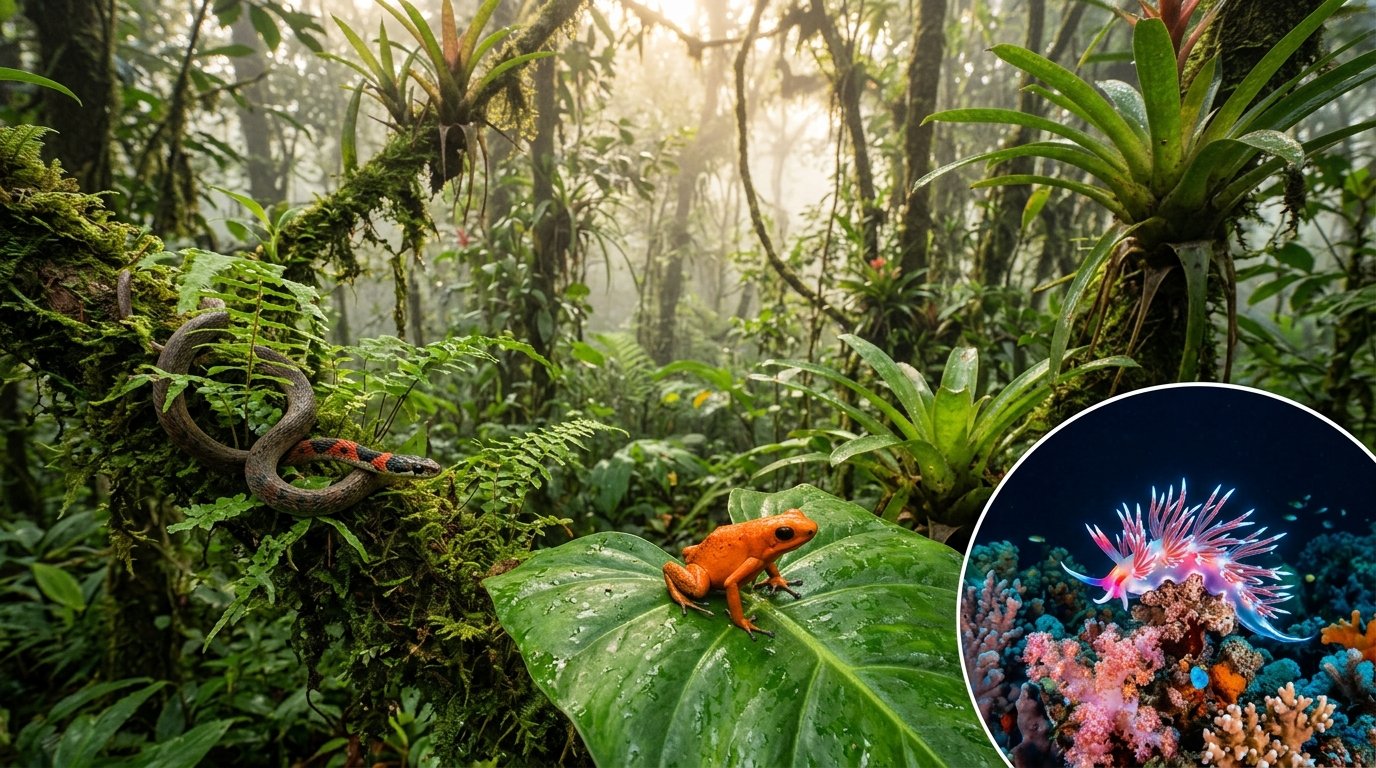
Imagine hiking through a steamy rainforest and spotting a tiny, jewel-bright frog perched on a leaf. It looks harmless, almost inviting, yet one wrong move and its skin could deliver a toxin strong enough to stop a predator in its tracks. Or picture a delicate sea slug drifting through coral reefs, its frilly back glowing with colors that scream danger. These creatures do not brew their own poisons. Instead, they steal them from their meals and turn those chemical defenses into their own weapons. That clever survival trick is called kleptotoxicity, and it reveals one of nature’s most inventive predator-prey dynamics.
Kleptotoxicity happens when an animal consumes toxic prey or plants, then sequesters (or stores) those chemicals inside its own body without getting harmed. The animal repurposes the stolen toxins for protection, often concentrating them in skin, special glands, or other tissues. This strategy saves energy compared to manufacturing poisons from scratch, and it lets species tap into powerful chemical defenses already perfected by other organisms. In the wild, kleptotoxicity shows up across oceans, forests, and even backyards, reshaping how animals hunt, hide, and survive. It also highlights why understanding these stolen defenses matters for everything from food webs to conservation efforts.
What Exactly Is Kleptotoxicity?
At its core, kleptotoxicity is nature’s version of borrowing a neighbor’s security system and installing it in your own home. The word combines “klepto,” meaning theft, with toxicity, and it describes how certain animals acquire ready-made chemical defenses from their diet. Unlike venomous creatures that produce their own toxins in specialized glands, kleptotoxic species rely on what they eat. They have evolved ways to safely absorb, transport, and store these compounds so the poisons do not hurt them but still pack a wallop against attackers.
This process differs from simple bioaccumulation, where toxins build up in the body over time and often cause harm higher up the food chain. In kleptotoxicity, the animal actively modifies or concentrates the chemicals for its own benefit. The result? A living weapon that deters predators through taste, irritation, or outright danger. Many kleptotoxic animals also display bright warning colors, known as aposematism, so potential threats learn to stay away after one bad experience.
You might wonder how this evolved. Over millions of years, predator-prey arms races pushed some species to develop resistance to certain toxins. Once resistant, they could safely eat poisonous prey and even turn those poisons against their own enemies. This strategy appears in diverse habitats, from tropical reefs to mountain streams, showing how flexible evolution can be when survival is on the line.
How Animals Pull Off This Toxic Heist
The mechanics behind kleptotoxicity are as fascinating as they are precise. First, the animal must locate and consume toxic prey without dying in the process. Specialized enzymes or proteins in the gut often break down or neutralize harmful effects during digestion. Next comes transport. The creature moves the intact or slightly modified toxins through its bloodstream or specialized cells to storage sites like skin glands, liver tissues, or defensive structures.
Storage is key. For many species, toxins end up in places where they can be quickly deployed, such as skin secretions or inflatable body parts. Some even pass the stolen chemicals to their offspring through eggs or milk-like secretions, giving the next generation a head start. The final step is deployment. When threatened, the animal might ooze toxins onto its skin, fire stinging cells, or simply taste terrible enough that predators spit it out and remember the lesson.
This entire system requires fine-tuned physiology. Animals must avoid damaging their own nerves or muscles while keeping the poisons potent. It is a remarkable feat of chemical sequestration, and scientists continue to study it for clues about new medicines or pest control.
Spotlight on Nature’s Thieves: Real Examples of Kleptotoxicity in Animals
Nature offers some of the best case studies of kleptotoxicity, and each one reads like a wildlife adventure story.
Start with nudibranchs, those psychedelic sea slugs often called “butterflies of the sea.” Many aeolid nudibranchs feed on cnidarians such as hydroids, anemones, or jellyfish. These prey pack nematocysts, tiny venom-filled stinging cells. Instead of digesting the nematocysts, the slugs route them through their gut unharmed, then store them in cnidosacs at the tips of their colorful cerata (those frilly appendages on their backs). When a fish or crab tries to take a bite, the nudibranch fires the stolen stinging cells like borrowed torpedoes. It is pure kleptotoxicity in the wild: the slug never made the venom, yet it wields it as its own.
Move to land and meet the poison dart frogs of Central and South America. These vibrant amphibians do not produce their signature alkaloids. They get them by munching on toxic ants, beetles, and mites that pick up the chemicals from rainforest plants. The frogs sequester the alkaloids in skin glands and can release them when stressed. Some species, like the golden poison frog, become so toxic that indigenous peoples have used their secretions on blow darts for hunting. Captive frogs raised on non-toxic diets lose their punch entirely, proving the toxins come straight from their menu. Their bright colors serve as a visual “do not eat” sign, reinforcing the predator-prey dynamics at play.
Then there are the rhabdophis keelback snakes, particularly the tiger keelback found across Asia. These snakes hunt poisonous toads and sequester bufadienolides (heart-stopping steroids) from the toads’ skin into special nuchal glands on the back of their necks. When threatened, the snake arches its body and presents those glands, sometimes even rupturing them to release the toxins. Remarkably, some keelbacks are also venomous, making them both poison users and venom producers. Mothers can even transfer the stolen chemicals to their eggs, arming hatchlings before they ever hunt. Researchers have shown that snakes from toad-free areas lack these defenses until fed toxic prey, confirming the dietary link.
Other examples exist too. Monarch butterfly caterpillars sequester cardenolides from milkweed plants, storing them through metamorphosis so adult butterflies remain distasteful. Even some birds, like the pitohui of New Guinea, borrow toxins from toxic beetles they eat and store them in feathers and skin. Each case shows how kleptotoxicity turns everyday meals into lifelong armor.
Here is a quick comparison of these masters of stolen defense:
| Animal | Source of Toxin | Storage Site | How It Uses the Defense | Habitat |
|---|---|---|---|---|
| Nudibranch sea slugs | Nematocysts from cnidarians | Cnidosacs in cerata | Fires stinging cells at attackers | Coral reefs and oceans |
| Poison dart frogs | Alkaloids from ants and mites | Skin glands | Secretes toxins on skin; warning colors | Tropical rainforests |
| Rhabdophis keelback snakes | Bufadienolides from toads | Nuchal glands on neck | Releases via glands or skin contact | Asian forests and streams |
| Monarch butterflies | Cardenolides from milkweed | Body tissues | Makes adults distasteful to birds | Meadows and gardens |
This table highlights the diversity of kleptotoxic strategies while underscoring one common thread: success depends on what they eat.
The Science Behind Chemical Sequestration and Predator-Prey Dynamics
Kleptotoxicity thrives because of an evolutionary arms race. Prey evolve toxins to avoid being eaten. Predators evolve resistance. Then some predators flip the script and steal the very weapons meant to stop them. This chemical sequestration influences entire food webs. A kleptotoxic species that suddenly becomes more abundant can shift predator-prey dynamics, forcing other animals to adapt or move on.
Scientists study these processes not just for curiosity but for practical insights. The way frogs handle alkaloids, for instance, could inspire new painkillers or anti-cancer drugs. Understanding nudibranch nematocyst storage helps researchers explore targeted drug delivery. And tracking how toxins move through ecosystems reveals hidden connections in nature.
How Kleptotoxicity Impacts Ecosystems, Trophic Cascades, and Biodiversity
Kleptotoxicity does more than protect individuals; it ripples through whole ecosystems. When a species relies on specific toxic prey, any change in that prey’s availability can trigger a trophic cascade. Remove the toxic ants that poison dart frogs eat, and frog populations drop. That leaves more insects for other predators, which might then overconsume plants or compete with birds. The result? Shifts in plant growth, insect outbreaks, or even soil health.
Invasive species add another layer. The invasive green crab, for example, aggressively preys on shellfish and small invertebrates in coastal waters. By disrupting native food webs, it can indirectly affect kleptotoxic species like sea slugs that depend on certain cnidarians. If green crabs reduce those prey populations or alter habitats, nudibranchs lose their toxin sources. Over time, this contributes to biodiversity loss as specialized chemical defenses become harder to maintain.
Kleptotoxicity also influences conservation. Protecting habitats means preserving not just the animals but the entire chain of toxic interactions that sustain them. Climate change and habitat fragmentation threaten these delicate balances, potentially leading to local extinctions and weakened ecosystems.
Common Misconceptions About Stolen Chemical Defenses
People often assume all bright animals make their own toxins or that kleptotoxicity is rare. In reality, it appears in many lineages and is more common than we once thought. Another myth is that these animals are always deadly to humans. Most kleptotoxic species use their poisons defensively and pose little risk unless handled or eaten. Finally, some believe captive breeding automatically preserves toxicity. As poison dart frogs prove, diet is everything.
Why Understanding Kleptotoxicity Matters for Conservation
As wildlife enthusiasts and biology students, recognizing kleptotoxicity helps us appreciate the intricate web of life. It reminds us that removing one link, like a toxic insect or a specific coral, can unravel defenses built over eons. Supporting habitat protection, fighting invasive species like the green crab through careful management, and educating others about these strategies all play a role in preserving biodiversity.
Next time you explore a tide pool or rainforest trail, look closer. That flashy nudibranch or dart frog might be carrying a chemical legacy stolen from its last meal. What’s your favorite example of nature’s clever adaptations? Share in the comments or tag a friend who loves wildlife. Let’s keep the conversation going and protect these amazing ecosystems together.
FAQs
What is kleptotoxicity in biology?
It is the process where animals acquire and store toxins from their diet to use as their own chemical defenses, rather than producing the poisons themselves.
Do poison dart frogs make their own toxins?
No. They sequester alkaloids from the insects they eat. Frogs raised in captivity on safe diets lose their toxicity completely.
How do nudibranchs use stolen nematocysts?
These sea slugs eat cnidarians, route the stinging cells to special sacs in their cerata, and fire them defensively when attacked.
Can kleptotoxicity affect entire food webs?
Yes. It influences predator-prey dynamics and can trigger trophic cascades when toxin sources change or disappear.
Are invasive species like the green crab linked to kleptotoxicity?
Indirectly. As aggressive predators, green crabs disrupt marine habitats and prey populations that kleptotoxic species rely on for their stolen defenses.
Is kleptotoxicity the same as bioaccumulation?
No. Bioaccumulation often harms the organism over time, while kleptotoxicity involves safe storage and active use of toxins for protection.
How can I help protect kleptotoxic species?
Support habitat conservation, avoid releasing invasives, and learn about local ecosystems so you can advocate for biodiversity in your area.