 By Bemi Brooks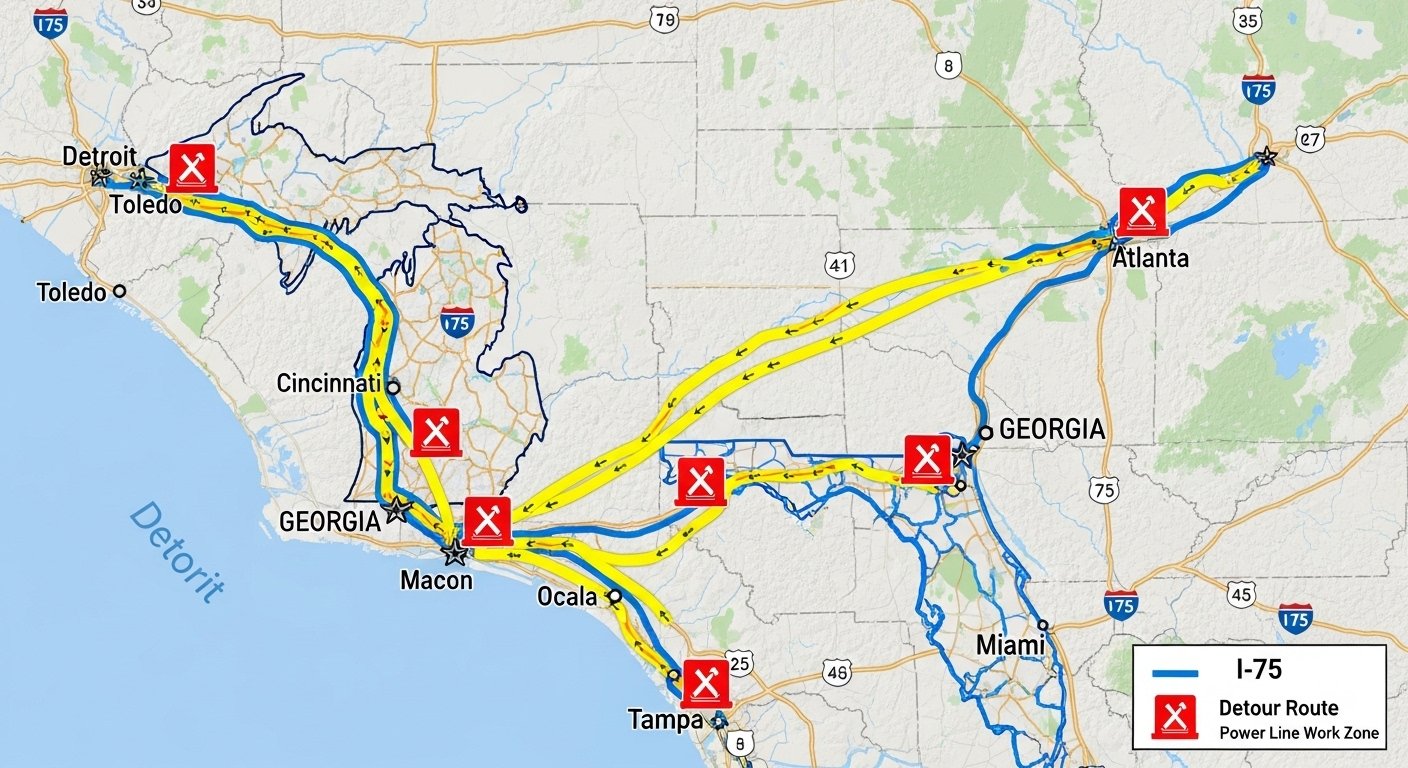
Have you ever merged onto I-75 expecting a smooth commute only to hit a sudden full freeway closure because of a power line shutdown? For commuters, truck drivers, and logistics teams rolling through Michigan, Georgia, and Florida, this scenario hits hard. These disruptions tie up the busy I-75 corridor, but they exist for one critical reason: keeping everyone safe while crews handle high-voltage transmission lines or utility pole relocation.
Whether caused by storm damage or planned grid upgrades, an i-75 power line shutdown protects utility workers and the public from serious hazards. This guide breaks down exactly what is happening, why it matters, how long it usually lasts, and the smartest ways to keep moving with minimal headache. You will find real-world examples, detour strategies, and practical tips pulled straight from Department of Transportation (DOT) procedures in the affected states.
What Triggers an I-75 Power Line Shutdown?
Power lines do not come down or get shut off without a reason. Most closures fall into two buckets: emergency situations and scheduled maintenance.
Storm-related incidents top the list. High winds, heavy rain, or ice snap lines or topple poles right onto the roadway. Recent examples include a full shutdown in Oakland County, Michigan, between 12 Mile and 14 Mile roads after a line fell across all lanes. Similar events have closed stretches near Vandalia, Ohio, and parts of Macon, Georgia, when trees and wires blocked traffic for hours.
Planned work makes up the other side. Utility companies sometimes need to relocate poles or upgrade high-voltage transmission lines that run parallel to the interstate. These projects improve grid infrastructure and prevent future outages, but they require temporary freeway closures or rolling roadblocks so crews can work safely near live traffic.
In every case, the DOT and utility crews treat the area as a public safety hazard. They shut down lanes (or the whole road) to avoid electrocution risks, falling debris, or driver distractions. Emergency maintenance happens fast after storms, while grid infrastructure upgrades often run at night to cut rush-hour pain.
Recent and Ongoing Impacts Along the I-75 Corridor
The i-75 power line shutdown affects different states in slightly different ways, but the frustration feels the same.
In Michigan, MDOT frequently deals with low-wire hazards or storm damage in the Metro Detroit area. Closures around Oakland County have lasted one to several hours while crews clear lines and restore power. Georgia drivers see similar issues south of Atlanta or near Macon after severe weather knocks lines down. Florida sections, especially around Tampa or Punta Gorda, sometimes combine utility work with larger resurfacing projects, leading to overnight lane restrictions.
Logistics managers and commercial truck drivers feel the ripple effects hardest. A single closure can delay deliveries by hours and force reroutes that add miles and fuel costs. Local residents near the freeway also notice increased traffic on side streets when drivers bail off the mainline.
The good news? DOT teams post updates quickly through apps, websites, and highway message boards. Checking real-time alerts before you leave can save you from sitting in surprise gridlock.
Traffic Detour Routes and Smart Navigation Options
When an i-75 power line shutdown hits, follow the signs first. DOT crews set up clear detours with orange barrels, arrow boards, and law enforcement guidance.
Common detour logic stays simple. Drivers exit early, take parallel routes like US highways or state roads, then re-enter I-75 past the work zone. In Michigan, for example, Oakland County closures often push traffic onto surface streets or nearby freeways such as I-696. Georgia detours around Macon might use I-475 or local connectors. Florida teams favor frontage roads or nearby arterials during nighttime work.
For the best results, use these tools:
- State 511 services (Michigan 511, Georgia 511, Florida 511) for live voice or text alerts.
- Apps like Waze or Google Maps that update in real time with DOT data.
- Truck-specific apps for commercial drivers that factor in height and weight restrictions on detour roads.
Avoid guessing. Blindly following your GPS can land you on narrow residential streets not built for heavy truck traffic. Stick to signed routes whenever possible.
How Long Will the I-75 Power Line Shutdown Last?
Duration depends on the cause. Emergency closures from downed lines often clear in one to four hours once crews remove the hazard and confirm the area is safe. Utility crews work fast because they know the economic cost of a full freeway closure.
Planned utility pole relocation or high-voltage work usually happens at night. Many projects schedule full or partial shutdowns between 9 p.m. and 5 a.m. so daytime commuters see little impact. Some larger grid infrastructure jobs stretch over several nights or weekends with phased rolling roadblocks that keep at least some lanes open.
Check the specific alert for your stretch of highway. DOT websites list expected reopening times, and updates come quickly if weather or complications extend the work.
Nighttime I-75 Power Line Shutdown: What to Expect
Night work has become the standard for many utility projects because it reduces congestion. You might see rolling roadblocks where a line of safety vehicles slowly escorts traffic through the zone at reduced speed. Headlights, cones, and bright work lights make these areas easy to spot, but they still require extra caution.
Truck drivers and late-shift commuters should plan extra time. Even with lighter traffic, narrowed lanes and slower speeds add minutes. Logistics managers often shift delivery windows or use alternate corridors like I-95 or I-65 when major nighttime work appears on the schedule.
Practical Tips to Avoid Traffic and Stay Safe
You do not have to let an i-75 power line shutdown ruin your day. A few simple habits make a big difference.
Leave earlier or later than usual when alerts pop up. Even a 30-minute shift can get you past the closure window.
Keep an emergency kit in the vehicle: water, snacks, phone charger, and a paper map as backup. Cell service sometimes drops near heavy utility work.
Commercial drivers should notify dispatch immediately and use pre-planned alternate routes. Many fleets now build I-75 contingency plans that include fuel stops off the detour paths.
Above all, slow down and stay alert in the work zone. Fines double, and utility crew safety depends on every driver paying attention.
Why These Shutdowns Matter for Grid Reliability
Nobody likes sitting in traffic, but these closures keep the lights on for millions of homes and businesses. Modernizing aging power lines and moving poles away from the freeway reduces future storm damage and improves response times during emergencies. In the long run, stronger grid infrastructure means fewer unplanned outages and safer highways.
DOT and utility teams coordinate closely to finish the job quickly and reopen lanes. Their priority remains the same: protect drivers, protect crews, and restore normal flow as soon as conditions allow.
Next Steps You Can Take Today
- Bookmark your state DOT traffic site or download the 511 app.
- Sign up for push alerts specific to I-75 in your region.
- Build a short list of reliable detour routes you know well.
- Share this information with coworkers or family members who travel the corridor regularly.
What is one change you will make the next time you see an i-75 power line shutdown alert? Planning ahead turns frustration into manageable delays and keeps you moving safely.
You May Also Like: Viltnemnda: A Guide to Local Wildlife Management
FAQs
How do I find out about an i-75 power line shutdown before I leave?
Check your state DOT website or 511 app. Michigan, Georgia, and Florida all push real-time alerts for freeway closures, including power line issues. Highway message boards also display updates several miles in advance.
Are detours clearly marked during these shutdowns?
Yes. DOT crews place large signs, cones, and electronic boards well before the closure. Law enforcement or flaggers often direct traffic at exit ramps. Follow the official detour signs instead of relying solely on GPS.
Do truck drivers have special restrictions on detour routes?
Some local roads cannot handle large rigs. Check truck-specific apps or call your state DOT for approved commercial detours. Many logistics managers keep updated route maps for common I-75 trouble spots.
Why does the shutdown sometimes happen at night?
Nighttime work cuts impact on rush-hour traffic while still allowing utility crews to complete high-voltage transmission line repairs or pole relocation safely. Rolling roadblocks and lane shifts are easier to manage with lower volumes.
Will my insurance cover delays caused by an i-75 power line shutdown?
Standard auto policies do not reimburse time lost in traffic. However, if you have commercial cargo insurance or business interruption coverage, review your policy for weather- or utility-related clauses. Most drivers simply plan extra buffer time.
Can I still use I-75 service roads or frontage roads during the closure?
Often yes, but they can get congested quickly. Local residents and businesses still need access, so drive with extra patience and watch for pedestrians or delivery vehicles entering from side streets.
What should I do if I see a downed power line on or near the highway?
Stay in your vehicle, call 911 immediately, and never touch or drive over the line. Assume it is energized until utility crews say otherwise. Keeping distance protects you and helps first responders work faster.