 By Bemi Brooks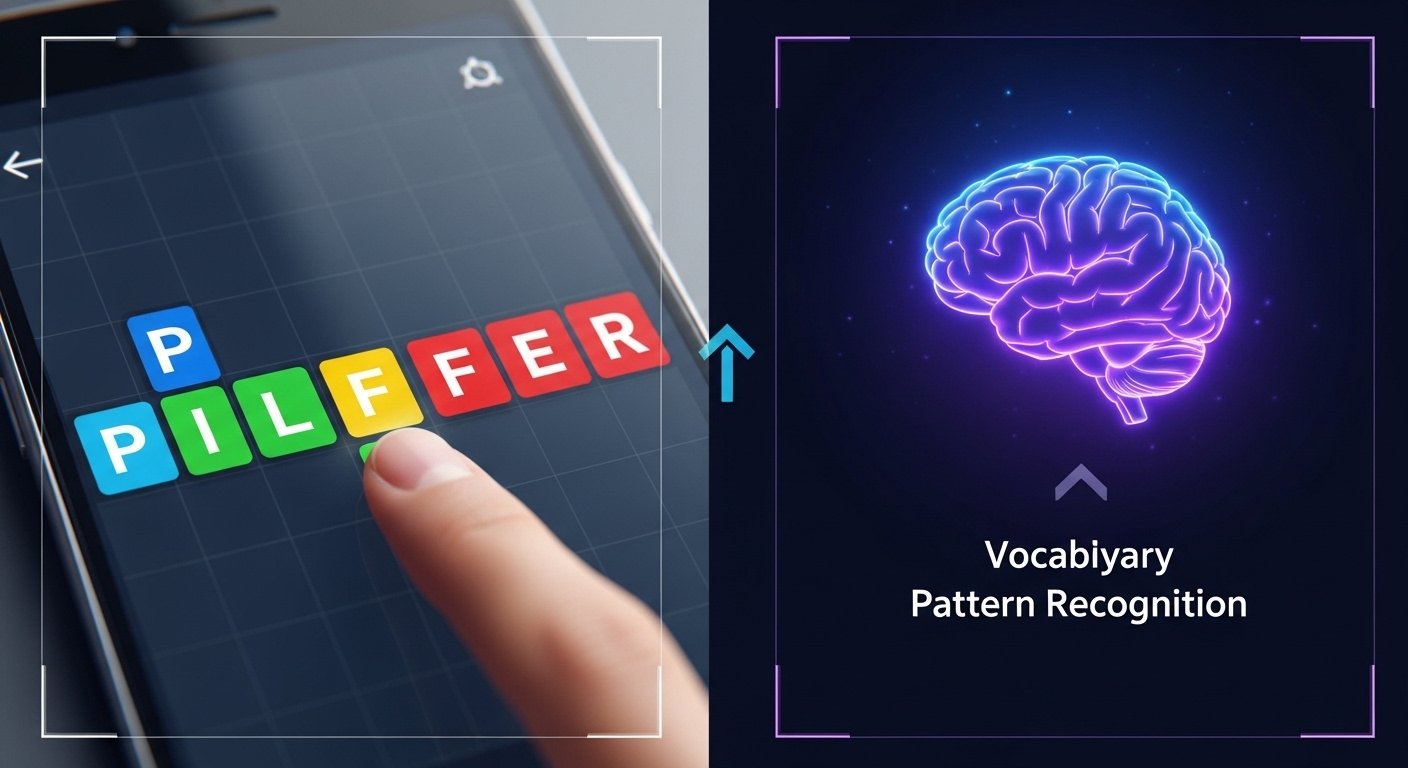
Have you ever looked at a jumble of letters and thought, “I know there is a $50 word hiding in there, but my brain is only offering me ‘cat'”? We have all been there. You stare at the digital word board, willing the letters to rearrange themselves into something intelligent. It is a moment of quiet frustration, but it is also the exact moment your brain starts building new connections.
Enter the pilfer game. If you are a fan of Wordle, a Scrabble enthusiast, or just someone who likes to keep the mental gears turning during a morning commute, this puzzle is about to become your new obsession. It takes the “lightbulb moment” of finding a hidden word and turns it into a competitive, fast-paced challenge.
I have been hooked on it for months, and today, I am going to walk you through everything you need to know. We will cover the rules, the strategies, and the secret sauce that turns beginners into word thieves. By the end of this guide, you will be ready to download the app and start swiping letters like a pro.
What Exactly is the Pilfer Game? (And Why You’ll Love It)
So, what is this game that is quietly taking up space in the minds of word puzzle enthusiasts? At its core, the pilfer game is a daily brain challenge that sits right at the intersection of an anagram solver and a heist movie.
Imagine you are looking at a digital game board. On it sits a “vault” filled with a jumble of letters. Your job? To “pilfer” or steal words from that vault by swiping your finger across the letters in the correct order. You are not just guessing words; you are actively hunting for them.
Unlike the solitary guesswork of Wordle or the turn-based competition of Scrabble, this game offers a unique blend of solo cognitive exercise and competitive word play. It feels less like a test and more like a treasure hunt. The thrill comes from spotting a long, complex word hiding in plain sight, knowing that your discovery is the key to unlocking the next level or beating your opponent.
Pilfer Game Rules for Beginners: The Heist Explained
Jumping into a new game can sometimes feel like being handed the controls to a spaceship with no instruction manual. Don’t worry. The rules here are intuitive, and you will probably grasp the basics within your first two minutes of play. However, understanding the nuances is where the real fun begins.
The Setup: The Letter Vault
When you start a round, you are presented with a grid of letters. This is your “vault.” It might be a 4×4 grid or a 5×5 grid, depending on the game mode. Inside this grid, words are hidden in various directions: horizontally, vertically, and diagonally. They can even be spelled backwards.
The Objective: Pilfer the Words
Your goal is to swipe your finger (or cursor) over the letters to form valid words. Once you lift your finger, the game checks if that word exists in its dictionary.
- Short words (3-4 letters) are the bread and butter. They keep the game moving and fill your score bar.
- Long words (6+ letters) are the jackpot. Finding these is how you truly dominate the leaderboards. They often use rare letters or tricky combinations.
The Stakes: Time and Energy
Most versions of the game introduce a stamina or time mechanic. You might have 60 seconds to pilfer as many words as possible, or you might have a set number of “swipes” before the vault locks. This adds a layer of pressure that turns a simple word search into a high-stakes linguistic heist.
Getting Started: Your First Game
Ready to give it a shot? Here is a simple step-by-step breakdown of what your first session will look like.
- Download the Game: Head to your app store. If you are looking for a pilfer game free download for android or iOS, the official version is usually free with optional in-app purchases. Search for “Pilfer” or “Pilfer Words.”
- Choose Your Mode: Start with the “Classic” or “Daily Challenge” mode. This gives you a low-pressure environment to learn the ropes.
- Scan the Board: Don’t just start swiping randomly. Take five seconds to scan the grid with your eyes. Look for common prefixes (RE-, UN-, DIS-) or suffixes (-ING, -ED, -ER). These are often the easiest words to spot first.
- Start Swiping: When you see a word, place your finger on the first letter and drag it to the subsequent letters. The game will highlight your path. Release when you finish the word.
- Check Your List: Submitted words appear in a list on the side. Watch this list grow. It is incredibly satisfying.
The Mental Benefits of Playing Pilfer Game
Okay, it is fun. But is it good for you? Absolutely. We often look for games to kill time, but it is a special treat when a game actively improves the time you spend on it.
Think of the pilfer game as a gym membership for your brain. When you play regularly, you are engaging in a serious cognitive exercise. You are training your brain to recognize patterns faster. Those letters stop looking like random characters and start looking like building blocks. This is pattern recognition at its finest.
Furthermore, it is a fantastic vocabulary builder. You might swipe a word like “tacit” and think, “Hmm, I know that word, but I never use it.” The next time it pops into your head during a conversation, you will have the game to thank. It pulls words from the dusty corners of your memory and puts them back into active rotation.
Pilfer Game vs Wordle: A Quick Comparison
If you are coming from the world of NYT Games, you might be wondering how this stacks up against the giant, Wordle. They are both word games, but they feel completely different. Let’s break it down in a simple table.
| Feature | Pilfer Game | Wordle |
|---|---|---|
| Core Mechanic | Finding multiple words in a grid | Guessing a single 5-letter word |
| Pace | Fast, time-pressured, frantic | Slow, methodical, contemplative |
| Gameplay Loop | High score chasing, clearing boards | One-and-done daily puzzle |
| Vocabulary Impact | Broadens active vocabulary | Tests deductive reasoning |
| Social Aspect | Competitive leaderboards, head-to-head | Sharing gray/yellow/green grids |
As you can see, they cater to slightly different moods. Wordle is your calm morning coffee. The pilfer game is the energetic workout that wakes you up.
7 Best Strategies for Pilfer Word Game
Knowing how to play is step one. Knowing how to win is step two. Here are the insider tips I have picked up that will help you climb the ranks.
1. The “Prefix and Suffix” Hunt
When a new board loads, don’t look for full words immediately. Look for the parts of words. Scan for “ING” in a corner. If you see it, look left or above it. Is there a “T” before it? “T” + “ING” probably isn’t a word. But “ST” + “ING” is. “STING” is a great find. This method helps you build words from the ground up.
2. Alphabet Strategy: Work the Corners
Letters at the edges of the grid are often overlooked by beginners. Seasoned players know that corners are prime real estate. Because they have fewer adjacent letters, they are often the start or end of the longest words on the board. If you see a ‘Q’ in the corner without a ‘U’ next to it, don’t ignore it. Look for the ‘U’ somewhere else in the grid that you can connect to. That corner ‘Q’ is a potential goldmine.
3. Don’t Just Read, Swipe
This sounds obvious, but it is a psychological trick. Sometimes your eyes will miss a word, but your muscle memory won’t. If you think you see a potential word, swipe it even if you aren’t 100% sure. The game will reject it if it is wrong, but the act of swiping can trigger your brain to recognize the pattern. It is like trying a key in a lock just to see if it fits.
4. Play the Daily Challenges Religiously
The daily challenges in the pilfer word game are specifically designed to test your limits. They often have unique themes or tricky letter combinations. By playing them every day, you expose yourself to a wider variety of word structures. It is like a vocab workout that keeps your brain flexible.
5. Shake Up Your Viewing Angle
If you are stuck, physically tilt your phone or look at the board from a different angle. This sounds silly, but it forces your eyes to look at the letter patterns differently. What looked like a random cluster from one angle might reveal the word “BLEAK” when you look at it sideways.
6. Master the Art of the Anagram
When you see a set of 5 or 6 letters close together, treat them like an anagram. Run through possible combinations in your head. “If I put an ‘S’ in front, what do I get?” This specific anagram solver mentality is the key to unlocking high scores.
7. Know When to Reset
If you are playing a mode with a timer and you have been staring at the same board for 30 seconds without finding a word, you are in a rut. Start swiping wildly. Find any three-letter word you can. Sometimes, clearing a short word off your mental checklist opens up the space in your brain to see the longer ones.
Why This Game Fits the Mobile Gaming Trends of 2024
We are seeing a massive shift in mobile gaming. People are tired of mindless tapping and games that beg for in-app purchases every five seconds. The trend is moving back toward quality, substance, and mental stimulation.
The pilfer game sits perfectly in this sweet spot. It respects your time. You can play for two minutes or two hours. It respects your intelligence. It challenges you without feeling impossible. And it taps into the competitive nature that social media has fostered in us. We want to share our scores, we want to beat our friends, and we want to feel smart doing it. This game delivers on all those fronts.
Digital Word Boards: A New Playground for Logophiles
For those of us who love language, digital word boards like the one in this game are a revelation. In the past, if you wanted to play with words, you needed a physical board, tiles, and opponents. Now, you have a pocket-sized playground.
The tactile sensation of swiping letters, the satisfying “click” when you submit a correct word, the visual flair of the board lighting up… it turns the abstract concept of “finding words” into a physical, engaging experience. It gamifies linguistics in a way that books and flashcards simply cannot. It turns vocabulary building into an adventure.
Overcoming Frustration: What to Do When You Can’t Find Words
Let’s be real. There will be times when you feel like the board is mocking you. You know the words are there, but your mind is a blank wall. Here is how to break through that wall.
First, take a physical break. Look away from the screen for ten seconds. Let your eyes refocus. Often, the answer appears the moment you stop looking for it.
Second, switch your focus. If you have been searching for 6-letter words, drop down to 3-letter words. Find “AT,” “IN,” “TO.” These small wins reset your brain’s confidence and can often lead you back to the bigger words.
Remember, every time you get stuck, you are learning. Your brain is mapping the letter combinations that don’t work, which makes it faster at finding the ones that do.
Ready to Start Pilfering?
The world of competitive word play is waiting for you. Whether you are looking to sharpen your linguistic skills, challenge a friend, or simply pass the time in a productive way, this game offers a perfect blend of fun and function.
The beauty of it is that you get out what you put in. If you play casually, you will enjoy the relaxation of finding words. If you play with intent, using the alphabet strategy and hunting for anagrams, you will sharpen your mind and dominate the scoreboards.
So go ahead, download the game. Take what is yours. Start pilfering.
You May Also Like: DigitalConnectMag.com: Your Strategic Gateway to High-Authority Digital Exposure
Frequently Asked Questions
Is the Pilfer game free to play?
Yes, the base version of the game is typically free to download and play. It usually includes daily challenges and classic modes. Some versions offer optional hints or cosmetic upgrades for purchase, but you can enjoy the core experience without spending a dime.
Can I play Pilfer game offline?
In most cases, yes. The classic solo modes are usually available offline, making it a perfect companion for subway rides or flights. However, competitive multiplayer modes and some daily events may require an internet connection to sync your scores.
How is Pilfer different from a regular word search?
In a traditional word search, you are given a list of words to find. In the Pilfer game, there is no list. You have to discover the words yourself using only your vocabulary and pattern recognition skills. It is a test of what words you can find, not just a test of your eyesight.
What happens if I swipe a word that isn’t in the dictionary?
The game will simply reject it. The word won’t be added to your score, and you will usually get a subtle vibration or visual cue that the word is invalid. There is no penalty for trying, so it encourages experimentation.
Does playing this game really improve vocabulary?
Absolutely. By repeatedly seeing words in a visual context and being forced to recall them, you strengthen the neural pathways associated with those words. It helps move words from your “recognition” memory (I know I’ve seen that word) to your “active” memory (I can use that word).
Are there daily challenges in the Pilfer game?
Yes, daily challenges are a staple of the experience. They reset every 24 hours and offer a unique puzzle that is the same for all players worldwide. This creates a great community aspect where you can compare your performance with friends.
What is the best strategy for beginners to get a high score?
Focus on finding all the short words first. Clear the board of 3 and 4-letter words. As the board empties, the remaining letters will stand out more, making it significantly easier to spot the longer, high-scoring words hiding in the corners.