 By Bemi Brooks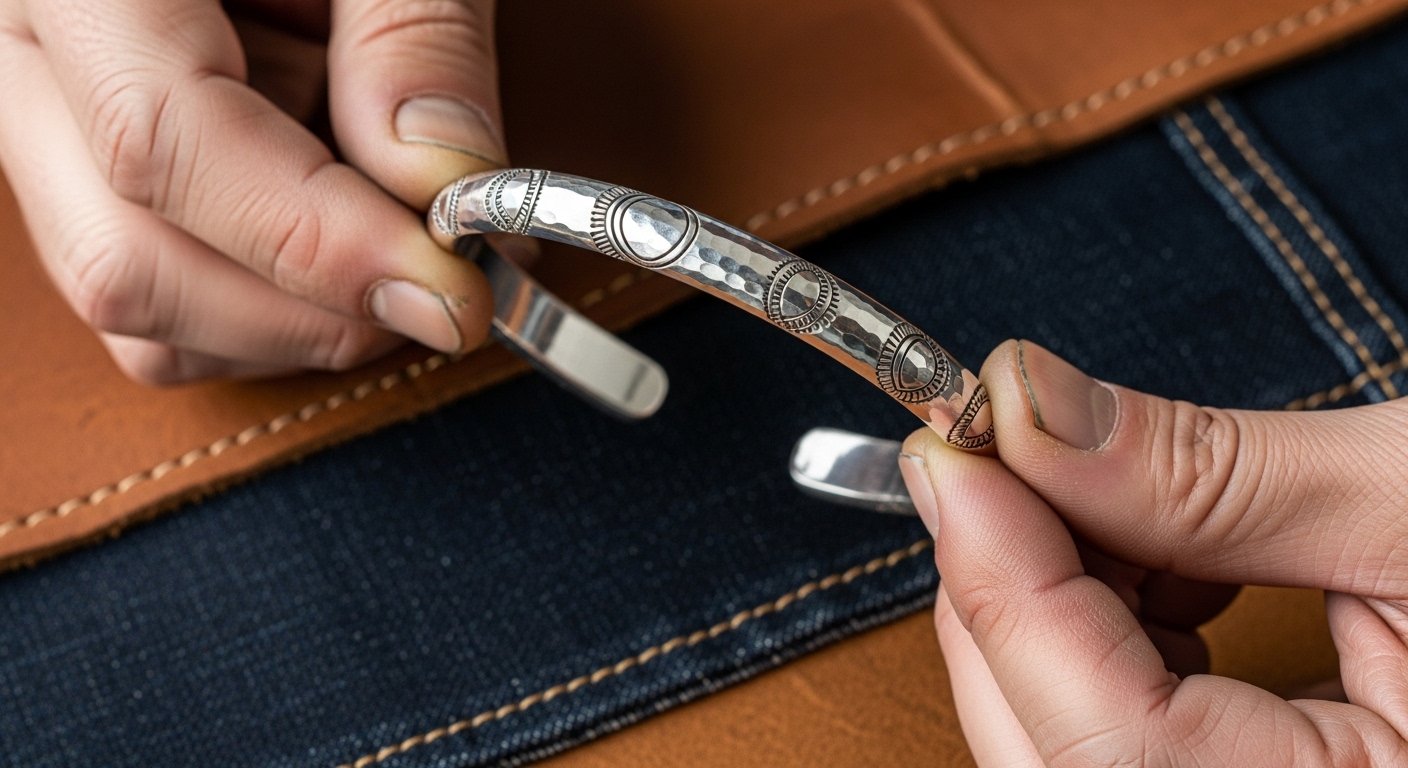
What does it feel like to hold an object that carries the spirit of two continents? For collectors who have worn the finest European gold and coveted the rarest streetwear grails, there comes a moment when “accessories” stop being mere adornments and start becoming anchors. They become artifacts. In the world of high-end artisanal fashion, few names command the quiet reverence reserved for Tsunaihaiya. This is not a brand that shouts from billboards. Instead, it whispers through the intricate grooves of hand-engraved jewelry, appealing to those who understand that true luxury lies not in a logo, but in the soul of the maker.
To understand Tsunaihaiya is to embark on a journey that bridges the rugged landscapes of the American Southwest with the disciplined precision of Japanese takumi (master artisans). This is a story of heritage, metal, and fire. It is a deep dive into why these sterling silver bangles have become the ultimate “must-have” for serious jewelry connoisseurs and enthusiasts of Japanese “Amekaji” style.
The Convergence of Two Worlds: A Story of Heritage
The narrative of Tsunaihaiya begins not in a sterile design studio in Tokyo, but at the intersection of cultural reverence and artistic obsession. To appreciate the brand’s unique position in the luxury silver accessories market, one must first understand its roots. The aesthetic draws heavily from the visual language of Native American jewelry, specifically the San Carlos Apache style and Navajo inspired jewelry traditions. However, it is filtered through the distinctly Japanese lens of mono no aware: the bittersweet awareness of impermanence and the deep appreciation for the hand of the artist.
This fusion was not a marketing gimmick. It was born from a genuine fascination by Japanese artisans who, post-World War II, developed a profound respect for Indigenous American cultures. They saw parallels between the spiritual significance of Native American totems and the Shinto reverence for nature found in Japan. Tsunaihaiya emerged from this lineage, taking the raw, unpolished energy of the Apache and Navajo silversmiths and refining it with the obsessive attention to detail characteristic of Japanese craftsmanship.
For the modern collector, owning a piece of Tsunaihaiya is akin to owning a historical document. It represents a bridge between two cultures that value storytelling through craft.
Yusuke Kuwano: The Takumi Behind the Metal
While the brand carries a legacy, the heartbeat of its modern incarnation lies with its head craftsman, Yusuke Kuwano. In the world of artisanal metalwork, Kuwano is a figure shrouded in the kind of mystique that collectors crave. He is not a designer who sketches concepts for factories to execute. He is a silversmith in the truest sense: one who heats, hammers, and engraves every curve by hand.
Kuwano’s workshop is a sanctuary of focused energy. Here, the process of creating a single sterling silver bangle can take days. The approach is rooted in the philosophy that the tool marks left behind are not imperfections, but signatures. When a collector runs their thumb across a Tsunaihaiya bangle, they feel the topography of its creation. There is a deliberate weight to the silver; it is not hollow or mass-produced. It is solid, substantial, and built to age.
This commitment to authenticity is what sets Tsunaihaiya apart. In an era of instant gratification, Kuwano operates on a timeline that respects the material. He often uses traditional Indigenous jewelry techniques, such as tufa casting, where molten silver is poured into hand-carved volcanic stone molds. Because the mold is destroyed upon removal, each piece is inherently unique. This is the antithesis of the “machine-made” luxury that often floods the market.
The Craftsmanship: A Symphony of Fire and Steel
To truly understand why Tsunaihaiya resonates with fans of Japanese craftsmanship, one must look beyond the finished product to the process. The artisanal metalwork involved is a multi-stage dialogue between the artist and the element.
The Process of Creation:
- Casting: Unlike commercial jewelry that uses wax molds, Kuwano often employs the lost-wax method or the aforementioned tufa casting. This ensures a granular, organic texture that machine polishing cannot replicate.
- Forging: The bangles are not simply bent into shape. They are forged. The metal is heated until it glows a dull red, then hammered to align the molecular structure of the silver, resulting in a durability that allows these pieces to be worn daily for decades without warping.
- Engraving: This is where the magic happens. Using a hand-held chisel called a graver, Kuwano etches patterns into the silver. The motifs are a hybrid lexicon: the thunderbirds and feathers of Apache tradition meet the waves and clouds of Japanese woodblock prints.
- Finishing: Perhaps the most distinct feature of Tsunaihaiya is the finish. It is rarely a high-polish, mirror shine. Instead, the silver is often left with a “satin” or “matt” finish that highlights the depth of the hand-engraved jewelry. Over time, as the silver oxidizes, the crevices darken, making the hand-carved designs pop with increasing contrast. This “aging” is celebrated, not feared.
The Iconic Apache Style: More Than Aesthetic
When discussing Tsunaihaiya, one cannot ignore the prominence of the Apache style bangles. These are considered the gateway pieces for collectors entering the world of high-end silver accessories. But why the Apache style specifically?
The San Carlos Apache tradition is known for its boldness. Unlike the delicate filigree of some European styles, Apache silversmithing emphasizes heavy gauge silver, large turquoise or coral stones, and deep stamp work. Tsunaihaiya adopts this boldness but refines the edges.
Table: Tsunaihaiya vs. Traditional Navajo Inspired Jewelry
| Feature | Traditional Navajo Inspired Jewelry | Tsunaihaiya Interpretation |
|---|---|---|
| Weight | Substantial, heavy gauge | Similarly substantial, but balanced for daily wear |
| Stones | Often uses natural turquoise, coral | May use high-grade turquoise, but also focuses on pure silver to highlight engraving |
| Engraving | Deep stamp work, often repetitive patterns | Hand-engraved narrative scenes; a fusion of Indigenous motifs and Japanese nature themes |
| Finish | Polished or oxidized | Unique matte or brushed finish designed to develop a rich patina over time |
| Philosophy | Spiritual protection, connection to land | Spiritual protection combined with Japanese wabi-sabi (beauty in imperfection) |
For the discerning collector, this hybrid approach results in a piece that is versatile. It looks authentic when paired with the rugged leather of an Amekaji outfit (think raw denim, heavy flannel, and engineer boots) yet carries enough sophistication to contrast with a tailored suit.
Tsunaihaiya and the Amekaji Movement
To understand the cult-like following of Tsunaihaiya, one must understand the context of Japanese “Amekaji” style. Amekaji translates to “American Casual,” but it is far more than just a fashion trend. It is a deep-seated cultural movement that began in the 1980s and 1990s, where Japanese enthusiasts became obsessed with vintage American workwear, denim, leather jackets, and, crucially, Native American jewelry.
In the Amekaji community, authenticity is currency. Collectors spend years seeking out the perfect fading jeans or the most perfectly broken-in leather jacket. Within this ecosystem, Tsunaihaiya occupies the apex of the accessory hierarchy. It is the “grail” item that signals to other enthusiasts that the wearer understands the depth of the culture.
It is common to see Tsunaihaiya worn in stacks: multiple sterling silver bangles clinking together on the wrist, often paired with a custom Tsunaihaiya rings for men featuring wolf heads or eagle feathers. This stacking tradition is rooted in the Native American practice of accumulating wealth and status on one’s person, adapted by Japanese collectors who treat their wrists as curated galleries of art.
The Collector’s Perspective: Why It’s a Must-Have
For the luxury jewelry collector who is used to the predictable cycles of Swiss watch releases or Italian gold chains, Tsunaihaiya offers something refreshingly elusive: scarcity and soul.
1. Rarity and Exclusivity
Unlike heritage brands that produce thousands of units, Tsunaihaiya operates on a strict output. Pieces are often released in small drops or require a relationship with specific retailers. The Tsunaihaiya jewelry price guide reflects this scarcity. While entry-level bangles might start in the mid-to-high hundreds, rare, heavily engraved pieces or those set with high-grade natural stones can command prices rivaling precious metal watches. This isn’t just jewelry; it is an asset class for the savvy collector.
2. The Debate: Tsunaihaiya vs. Goro’s Jewelry
No discussion about Japanese silver craftsmanship is complete without addressing the elephant in the room: Goro’s. Goro’s, founded by the legendary Goro Takahashi, is the undisputed king of Amekaji silver. However, Tsunaihaiya offers a distinct alternative.
- Goro’s is defined by its eagle motif and a specific, almost religious adherence to the Goro Takahashi legacy.
- Tsunaihaiya, under Yusuke Kuwano, offers a broader narrative. It bridges the gap between the Japanese reverence for the eagle and the specific storytelling of the Apache peoples. Collectors often note that Tsunaihaiya pieces feel slightly more “sculptural” and “contemporary” while retaining the same level of hand-forged integrity. For the collector who respects Goro’s but wants to explore the wider ecosystem of Japanese silversmiths, Tsunaihaiya is the natural next step.
3. The Aging Process
A new Tsunaihaiya piece is beautiful. A worn one is breathtaking. Collectors take pride in how their silver oxidizes. The hand-engraved jewelry develops a unique patina that acts as a visual diary of the wearer’s life. Where machine-made jewelry looks dirty when tarnished, the tarnish on a Tsunaihaiya piece enhances the depth of the carving. It is a living artifact.
Where to Find Authentic Pieces
Given the brand’s exclusivity, one of the most common questions is where to buy Tsunaihaiya silver. The answer requires patience. Authentic pieces are rarely found on mainstream e-commerce sites. Instead, they are distributed through a network of high-end select shops that specialize in Amekaji and artisanal fashion, primarily in Japan, with a few authorized dealers in the United States and Europe.
For the serious collector, purchasing a piece is an experience. It often involves visiting a shop where the staff are knowledgeable about the history of Tsunaihaiya craftsmanship. They can guide you on sizing, because unlike adjustable mass-market jewelry, these sterling silver bangles are rigid. They must fit perfectly to slide over the hand and sit comfortably on the wrist. This tactile experience, the ability to weigh the piece in your palm before committing, is part of the allure.
Conclusion: Investing in the Soul
In a world flooded with digital assets and fleeting trends, there is a profound satisfaction in owning something that was made by fire, steel, and human intention. Tsunaihaiya represents the pinnacle of this desire. It is for the collector who understands that true luxury is not about being seen, but about knowing. It is for the enthusiast of Japanese Amekaji style who respects the history of the San Carlos Apache. It is for anyone who looks at a piece of metal and sees the ghost of the artist’s hands in the light reflecting off a hand-engraved surface.
To invest in Tsunaihaiya is to invest in a legacy that respects the past while forging a unique identity for the future. These are not simply luxury silver accessories; they are companions for the journey of life, designed to age with grace and tell a story that is distinctly your own.
If you are ready to begin your journey, start by researching the authorized dealers near you. Handle the pieces. Feel the weight. Ask to see the hallmarks of Yusuke Kuwano’s work. And once you find the piece that speaks to you, wear it. Do not lock it away. Let it meet the sun, the rain, and the years. That is what it was made for.
You May Also Like: webfreen.com Fashion: Your Shortcut to Effortless Everyday Style
Frequently Asked Questions
What makes Tsunaihaiya different from other Japanese silver jewelry brands?
Tsunaihaiya distinguishes itself through its specific fusion of San Carlos Apache style with Japanese takumi craftsmanship. While brands like Goro’s focus heavily on the eagle motif, Tsunaihaiya explores a broader narrative of Indigenous techniques, resulting in a more sculptural and narrative-driven aesthetic that appeals to collectors of artisanal metalwork.
How do I care for my Tsunaihaiya sterling silver bangles?
To maintain the natural patina, avoid using harsh chemical dips. Instead, use a soft cloth to wipe away sweat after wear. If you prefer a brighter finish, use a silver polishing cloth lightly on the high spots, leaving the recessed hand-engraved areas darkened to highlight the detail. The beauty of Tsunaihaiya lies in its natural aging.
Is the jewelry made by Yusuke Kuwano himself?
While Yusuke Kuwano is the head artisan and creative force, the brand operates with a small team of master craftsmen working under his direct supervision. High-end pieces and custom orders are often handled personally by Kuwano, ensuring that every piece meets the rigorous standards of Japanese jewelry craftsmanship.
Where can I find an authentic Tsunaihaiya jewelry price guide?
Due to the handmade nature and fluctuating material costs, there is no single static price list. Pricing varies significantly based on the complexity of the hand-engraving, the weight of the silver, and the use of gemstones. The best way to get accurate pricing is to contact an authorized Amekaji retailer or visit a physical boutique.
Can I stack Tsunaihaiya bangles with other brands?
Absolutely. The aesthetic of Amekaji encourages stacking. Tsunaihaiya pieces are designed with clean, sturdy lines that stack beautifully with other high-end Navajo inspired jewelry or Goro’s pieces. Just be mindful that the heavy gauge silver can scratch softer metals, so many collectors embrace the “battle scars” as part of the story.
Does Tsunaihaiya offer custom rings for men?
Yes, custom orders are sometimes available depending on the workshop’s schedule. Custom Tsunaihaiya rings for men are highly sought after, often featuring deep hand-engraved motifs like bear paws, feathers, or traditional Japanese waves. These commissions usually require a visit to a flagship retailer and a significant lead time.
Is Tsunaihaiya considered a good investment?
Due to its limited production, high demand within the Amekaji community, and the reputation of Yusuke Kuwano, Tsunaihaiya pieces tend to hold their value exceptionally well. Rare, vintage, or heavily engraved pieces often appreciate in value on the secondary market, making them a sound acquisition for serious jewelry collectors.