
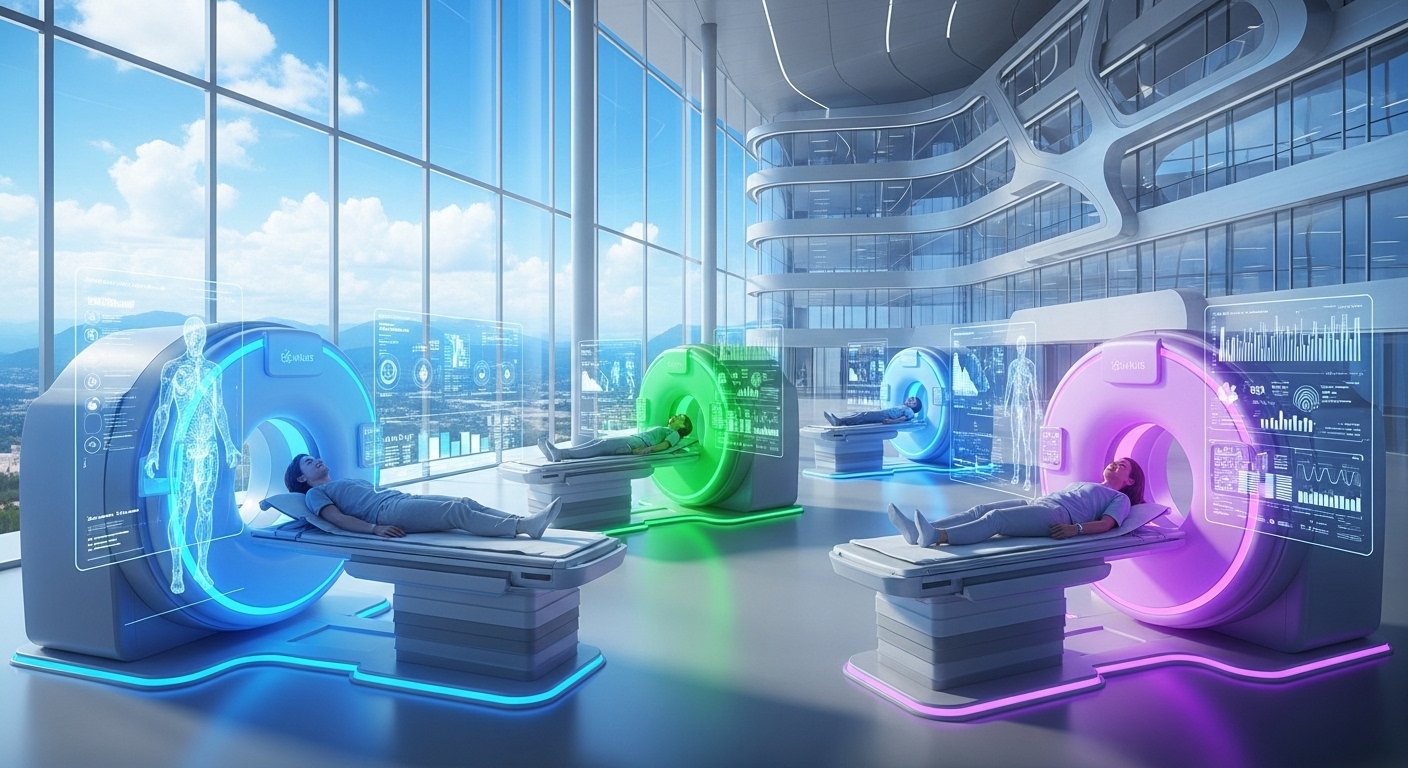
Have you ever felt nervous about an upcoming medical test, wondering what those machines really do or why your doctor ordered one? Think of diag image as a way to peek inside your body without any cuts or pokes, much like using a flashlight to check under the hood of a car. This technology, also known as medical imaging, has become a cornerstone in healthcare, helping doctors spot issues early and plan the best care. In this guide, we’ll explore what diag image entails, the different radiology modalities available, and how innovations like AI are boosting diagnostic accuracy to make healthcare smarter and safer.
The Basics of Diag Image
Diag image refers to a range of techniques that create visual representations of the body’s interior to help diagnose, monitor, and treat medical conditions. It’s non-invasive diagnosis at its core, meaning no surgery is needed to see what’s going on inside. From spotting a broken bone to checking for heart problems, these tools give doctors a clear view that blood tests or physical exams alone might miss.
Imagine your body as a complex machine: diag image acts like a detailed blueprint, revealing structures and activities that could signal health issues. Common uses include identifying injuries, detecting diseases like cancer, and guiding treatments. For patients facing tests, knowing the basics can ease anxiety, as most procedures are quick and painless. Healthcare students might appreciate how this fits into clinical workflow, while administrative staff can see its role in efficient patient care.
One common myth is that all diag image involves high radiation risks, but many options, like ultrasound or MRI technology, use none at all. This makes them safe for repeated use, especially in monitoring chronic conditions.
Common Types of Diag Image Scans
There are several radiology modalities, each suited to different needs. Here’s a breakdown of the most common ones, with pros and cons to help you understand when they’re used.
| Modality | Description | Pros | Cons | Best For |
|---|---|---|---|---|
| X-ray | Uses low-dose radiation to capture images of bones and dense tissues. | Quick, inexpensive, widely available. | Limited for soft tissues; involves some radiation. | Fractures, chest infections. |
| CT Scan | Combines X-rays for cross-sectional views of the body. | Detailed 3D images; fast for emergencies. | Higher radiation than X-ray; contrast dye sometimes needed. | Tumors, internal bleeding. |
| MRI Technology | Employs magnets and radio waves for soft tissue details. | No radiation; excellent for brain and joints. | Loud, time-consuming; not for those with metal implants. | Neurological issues, muscle injuries. |
| Ultrasound (Sonography) | Uses sound waves to view organs in real-time. | Safe, no radiation; portable. | Operator-dependent; less clear for deep structures. | Pregnancy checks, heart function. |
| Nuclear Medicine | Involves tracers to show organ function. | Reveals metabolic activity. | Involves small radiation dose. | Cancer staging, thyroid issues. |
| PET Scan | Combines nuclear tracers with CT for functional imaging. | Detects early disease changes. | Higher cost; radiation involved. | Cancer detection, brain disorders. |
These scans cover a wide range, from basic X-rays at your local clinic to advanced PET at specialized centers like Johns Hopkins. For instance, if you’re dealing with persistent back pain, an MRI might reveal a herniated disc that an X-ray overlooks.
Benefits of Modern Diag Image Technology
Modern diag image technology brings huge advantages, transforming how we approach health. First, it enables early detection, catching problems before they worsen and improving outcomes. Take healthcare informatics: digital systems now store and share images instantly, speeding up decisions and reducing errors.
Patients benefit from less invasive options, meaning shorter recovery times and fewer complications. For example, a CT scan can diagnose heart disease without exploratory surgery. Innovations like lower radiation doses in X-rays make tests safer, especially for frequent users.
In real terms, institutions like Mayo Clinic use these tools to tailor treatments, boosting precision and patient satisfaction. Overall, the benefits of modern diag image technology include better accuracy, faster results, and empowered care teams.
How Diag Image Helps in Early Detection
Early detection saves lives, and diag image is key here. It spots subtle changes that symptoms haven’t revealed yet, like tiny tumors on a mammogram. Think of it as a vigilant guard, scanning for threats before they grow.
For general health, routine screenings like low-dose CT for lung issues can catch problems in high-risk groups, reducing mortality by up to 20 percent. This non-invasive approach means you can get checked without major disruption, leading to timely interventions.
A common misconception is that only symptomatic people need scans, but proactive use in wellness programs proves otherwise, enhancing long-term health.
Diag Image for Cancer Screening
When it comes to cancer, diag image shines in screening. Mammography for breast cancer or CT for colon polyps allows for early intervention, often before spread occurs. PET scans highlight active cells, aiding in precise staging at centers like Stanford Health Care.
For patients, this means less aggressive treatments if caught early. Diag image for cancer screening has boosted survival rates, as seen in breast cancer reductions thanks to regular checks. It’s reassuring to know these tools are on your side, turning potential threats into manageable issues.
The Role of AI in Diag Image
AI is supercharging diag image, making it faster and more accurate. In 2026, AI analyzes scans to spot anomalies humans might miss, like subtle lung nodules. It’s like having a tireless assistant that processes vast data in seconds.
Deep learning improves image quality, reduces noise, and even predicts outcomes. At places like BCG, AI copilots synthesize patient data for better diagnoses, cutting errors. The role of AI in diag image enhances clinical workflow, freeing doctors for patient interaction while boosting diagnostic accuracy.
For seniors or complex cases, AI tailors scans, minimizing risks and improving precision. It’s exciting how this tech is evolving, promising even more in healthcare informatics.
Diag Image Procedures for Patients
If you’re heading for a scan, here’s what to expect. Most diag image procedures for patients start with preparation: fasting for CT or removing metal for MRI. During the test, you’ll lie still while the machine works, often with a technician guiding you.
Ultrasounds involve gel on the skin for sound wave clarity, while X-rays are over in minutes. Post-scan, results come via your doctor, who explains next steps. It’s straightforward, and staff at facilities like UVA Radiology ensure comfort.
Tips: Wear comfy clothes, ask questions, and relax, knowing these are routine and safe.
Understanding Diag Image Results
Decoding results can feel daunting, but they’re structured for clarity. Reports include sections like findings (what’s seen) and impression (key takeaways). Terms like “lesion” mean an abnormal area, while “normal” is reassuring.
Understanding diag image results empowers you: discuss with your doctor if something’s unclear. For example, hyperdense on CT might indicate bone, not always a problem. Tools like PocketHealth help access and explain images easily.
In summary, diag image is revolutionizing healthcare by offering precise, non-invasive insights that lead to better outcomes. Whether you’re a patient prepping for a scan or a student diving into the field, embracing this technology can make a big difference.
5 Practical Tips:
1. Schedule regular screenings if at risk.
2. Ask about low-radiation options.
3. Use apps for result tracking.
4. Discuss AI-enhanced scans with your provider.
5. Stay informed through reliable sources like MedlinePlus.
What’s your take on how tech like AI is changing medical tests? Share in the comments!
FAQs
What is diag image?
Diag image, or medical imaging, uses techniques like X-rays and MRIs to visualize the body’s interior for diagnosis.
How does AI improve diag image?
AI analyzes images quickly, spotting subtle issues and enhancing accuracy, as seen in 2026 trends.
What are common diag image scans?
Popular ones include X-rays, CT, MRI, ultrasound, and PET for various body checks.
Does diag image help with cancer screening?
Yes, it detects early signs, improving treatment success rates through tools like mammography.
Are diag image procedures safe?
Most are low-risk, with options avoiding radiation; always discuss concerns with your doctor.
How do I understand my diag image results?
Look at the impression section for summaries; consult your provider for explanations.
What are the benefits of modern diag image?
It offers early detection, precision, and safer care, reducing invasive procedures.