 By Bemi Brooks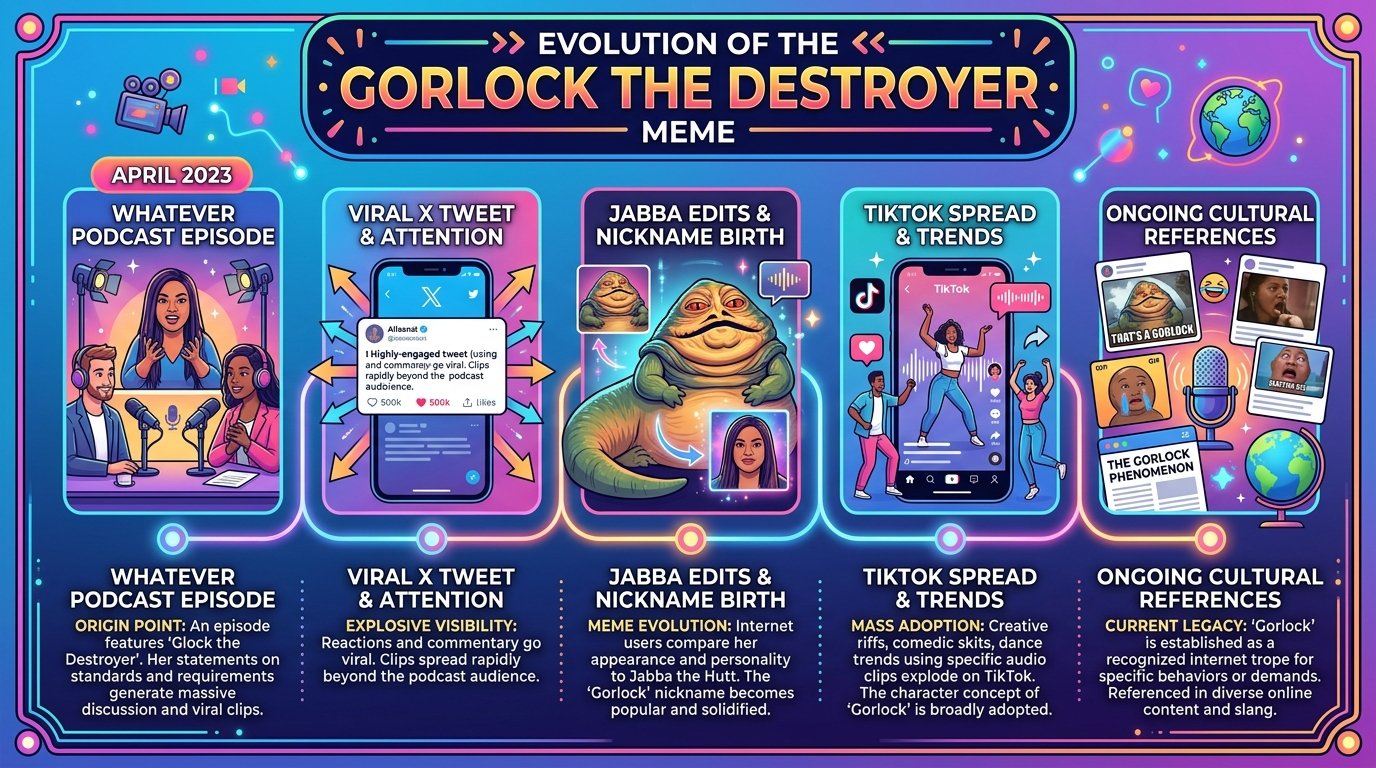
Scroll through TikTok or X and you might spot the name Gorlock the Destroyer popping up in comments, video captions, or meme compilations. The phrase sounds like it belongs to a video game boss or fantasy villain. In reality, it started as a nickname for a real person after one memorable podcast appearance.
The story shows how quickly a single clip can turn into lasting internet lore, complete with edits, debates, and cultural ripples that stretch years later.
The Podcast Interview That Sparked the Meme
The Whatever Podcast hosts candid group conversations about dating, relationships, and modern life. Young women guests share unfiltered opinions in episodes that often attract attention for their bold takes.
One episode from April 25, 2023, featured several guests discussing personal styles, deal breakers, and self-perception. During the chat, one participant described herself with high confidence. She called herself a “bad bitch” and a “baddie.” When asked to rate herself out of ten, she gave a strong self-assessment that included embracing her plus-size figure.
Clips from that exchange spread fast. Viewers noticed the contrast between her and the other guests on the panel. Short edited versions landed on TikTok and X, where people began reacting and remixing the moment. The confidence came across loud and clear, yet the online response quickly took a different turn.
How the Nickname Gorlock the Destroyer Was Born
The day after the episode aired, an X user posted a screenshot of the guests. In the tweet, the other participants received ordinary names like Ashley or Rachel. The standout guest received the label “Gorlock the Destroyer.”
The name landed because it felt absurd and over the top. It played on the idea of a larger-than-life presence in both a literal and humorous sense. The post gained traction immediately, racking up millions of views and thousands of shares within days.
Soon after, edited videos appeared. One popular version dubbed the guest’s voice with audio from Jabba the Hutt, the large slug-like character from Star Wars. The edit leaned into size-based humor and spread rapidly across platforms. These clips turned the moment into shareable content that commentary channels and meme accounts picked up.
The nickname stuck because it combined visual contrast, confident dialogue, and quick remix potential. What began as one tweet evolved into a recognizable shorthand across social media.
Who Is Ali C. Lopez?
Ali C. Lopez is the woman at the center of the meme. Born on May 5, 2000, she is a TikTok creator and influencer based in Arizona. Her account @al.weeezy features lip-sync videos, POV skits, mini vlogs, and messages centered on self-confidence. She presents herself as a plus-size transgender woman who celebrates her body and identity without apology.
Before the podcast clip went viral, Lopez already built a following through consistent, bold content. She often speaks about self-worth, relationships, and personal style. Her approach resonates with audiences who appreciate unfiltered self-expression.
The meme did not create her online presence. It amplified attention around one specific appearance while she continued posting her regular videos focused on empowerment and everyday life.
How the Meme Spread and Evolved
From that initial X post, the content moved quickly. TikTok users stitched and dueted the clips, adding their own captions or reactions. YouTube channels compiled the best moments and edits. Reddit threads in cringe or meme communities discussed the clip and its remixes.
The humor ranged from light absurdity to sharper body-focused jokes. Some creators leaned into the fantasy-villain framing, imagining Gorlock the Destroyer as a character in skits or image macros. Others used the name as shorthand when referencing similar confident or larger-than-life personalities in online spaces.
By late 2023 and into following years, the meme had become part of broader internet culture. Clips resurfaced in compilations. New references appeared whenever similar podcast moments or confident guests gained attention. The name turned into digital folklore, a reference point that newer users encountered through reaction videos or trending sounds.
Ali C. Lopez’s Response and Continued Presence
Lopez has addressed the nickname in interviews and posts. She has shared that it sometimes bothers her, yet she also considered leaning into it at points. Her overall approach stayed consistent. She kept creating content that highlights confidence and self-acceptance.
When old photos surfaced online, she responded publicly with pride in her journey and appearance both then and now. She has returned to podcast formats and maintained her social channels. Her content continues to focus on personal expression rather than the meme itself.
This resilience stands out in a space where viral attention often brings intense scrutiny. Lopez shows one example of how creators navigate sudden notoriety while staying true to their message.
What the Gorlock the Destroyer Phenomenon Reveals About Internet Culture
The meme illustrates several patterns in today’s online world. A short clip from a niche podcast can reach millions through editing tools and algorithmic amplification. Visual contrast and absurd humor accelerate sharing. Once a nickname forms, it can take on a life of its own, detached from the original context.
At the same time, the story highlights real concerns around cyberbullying. Many versions of the meme relied on fatphobic comments and appearance-based mockery. Such content disproportionately affects creators from marginalized communities, including plus-size and transgender individuals. What starts as a “joke” can contribute to sustained harassment, doxxing attempts, or leaked personal images.
Platforms and users both play roles here. Better moderation, slower sharing habits, and empathy reminders can reduce harm. The Gorlock the Destroyer case serves as a clear example of how digital culture can celebrate confidence in one breath and undermine it in the next. It also shows the staying power of memes that tap into both humor and discomfort.
Common Misconceptions Cleared Up
Many people encounter the name without the full background. Here are a few frequent mix-ups.
Gorlock the Destroyer is not a fictional character or self-created persona. It began as an external nickname from a tweet.
The original context was a standard dating and relationship discussion on a podcast, not a dramatic confrontation or performance.
Ali C. Lopez maintains an active content career centered on self-love and personal style. The meme represents one chapter, not her entire identity or body of work.
The phenomenon continues to circulate because remix culture keeps older clips alive. New generations discover it through compilations rather than the 2023 source material.
Key Takeaways from the Viral Moment
- A single confident statement on a podcast can spark years of online conversation when paired with the right visual and remix energy.
- Nicknames born from jokes can evolve into cultural shorthand, sometimes losing connection to the real person involved.
- Behind every viral clip stands a creator with their own goals, audience, and resilience.
- Internet humor often walks a line between playful absurdity and hurtful stereotypes, making awareness of cyberbullying essential.
Next time a strange name or clip trends, pause and consider the full picture. The internet moves fast, yet the people at the center of these moments live with the aftermath long after the views peak.
What meme from the past few years made you stop and wonder about the real story behind it?
You May Also Like: Deja Jackson: Spotlighting Three Women’s Basketball Standouts
FAQs
What does Gorlock the Destroyer mean?
It is a nickname that internet users gave to TikTok creator Ali C. Lopez after her appearance on the Whatever Podcast. The name started as an absurd joke in a tweet and grew into a wider meme.
Who started the Gorlock the Destroyer meme?
An X user posted the original tweet on April 26, 2023, labeling podcast guests with humorous fake names and giving Lopez the Gorlock title. Edited video clips followed the same day and helped it spread.
Is Gorlock the Destroyer Ali C. Lopez’s real name or brand?
No. Her real name is Ali C. Lopez. She creates content under @al.weeezy focused on confidence and self-expression. The nickname came from outside observers as part of the meme.
Why did the meme go viral so quickly?
The combination of confident self-description, visual contrast with other guests, an over-the-top fantasy-style name, and easy-to-share video edits with popular audio fueled rapid spread across X, TikTok, and YouTube.
How has Ali C. Lopez responded to the nickname?
She has described mixed feelings, noting that it sometimes bothers her while also considering ways to move past it. She continues posting her regular content and has addressed related online incidents with resilience and pride in her identity.
Where can people find the original clips or more context?
Full episodes and clips live on the Whatever Podcast YouTube channel and associated social accounts. Short versions and reactions appear across TikTok and X under related hashtags and sounds.
Does the meme connect to cyberbullying awareness?
Yes. Many versions relied on body-shaming and appearance-based humor that targeted Lopez as a plus-size transgender woman. The case highlights how quickly online jokes can turn into sustained harassment and why thoughtful sharing matters in digital spaces.